From Dasharath Stadium to Sports Award: Nepal’s sporting calendar paralysed by GenZ protest

 Sports Nepal
 Prajwal Oli
Kathmandu: The sports sector—long treated as a low priority in national affairs—has suffered heavily from the ongoing Gen Z–led protests that swept across the country on Sunday and Monday.
The demonstrations, which have already claimed 70 lives and left many critically injured, culminated in one of the most shocking episodes in the country’s history. Property worth billions was reduced to ashes, including iconic landmarks such as Singha Durbar.
For Nepali footballers and fans, the return of international football to Dasharath Stadium after nearly two years had been a moment of joy. The stadium, regarded as the home of Nepali football, had been barred from hosting AFC and FIFA-sanctioned matches since being declared ineligible by the Asian Football Confederation. The excitement was palpable when it was confirmed that Nepal would host Bangladesh in a two-legged FIFA international friendly.
Although the first game on Saturday ended in a goalless draw, the second match scheduled for Tuesday was cancelled in the wake of Monday’s unrest.
“It is heartbreaking that so much devastation has occurred in such a short time, with so many lives lost,” said national striker Anjan Bista, who shares the record of 13 international goals for Nepal with Hari Khadka and Niranjan Rayamajhi. “Life matters more than football, but we were truly thrilled to see the game return to Dasharath Stadium. It was deeply disappointing that things did not go as planned.”
The franchise-based Everest Women’s Volleyball League, underway in Pokhara, became another casualty of the turmoil. The event, featuring six franchise teams and scheduled for September 5–13, was abandoned midway on September 9 after only nine of the planned 16 matches were completed.
Hotels housing two of the teams—Kathmandu Spikers and Pokhara Ninjas—were set ablaze by protesters, creating an atmosphere of chaos and fear. The tournament had attracted 18 international players from countries including Thailand, Serbia, Russia, and Croatia. Terrified by the violence, most of the foreign recruits have already left Nepal.
The fate of the National Games, the country’s largest multi-sport event, has also become uncertain. The 10th edition, originally scheduled for last year in Karnali Province, was postponed due to political instability and government apathy. It had been rescheduled for November–December this year, but the prospects now look bleak.
With major government offices—including the Prime Minister’s Office, the President’s Office, and the Parliament Building—reduced to ashes, the likelihood of the Games receiving budgetary priority is slim. The last edition, held in Gandaki Province in October 2022, had cost nearly Rs 537.9 million, according to the National Sports Council.
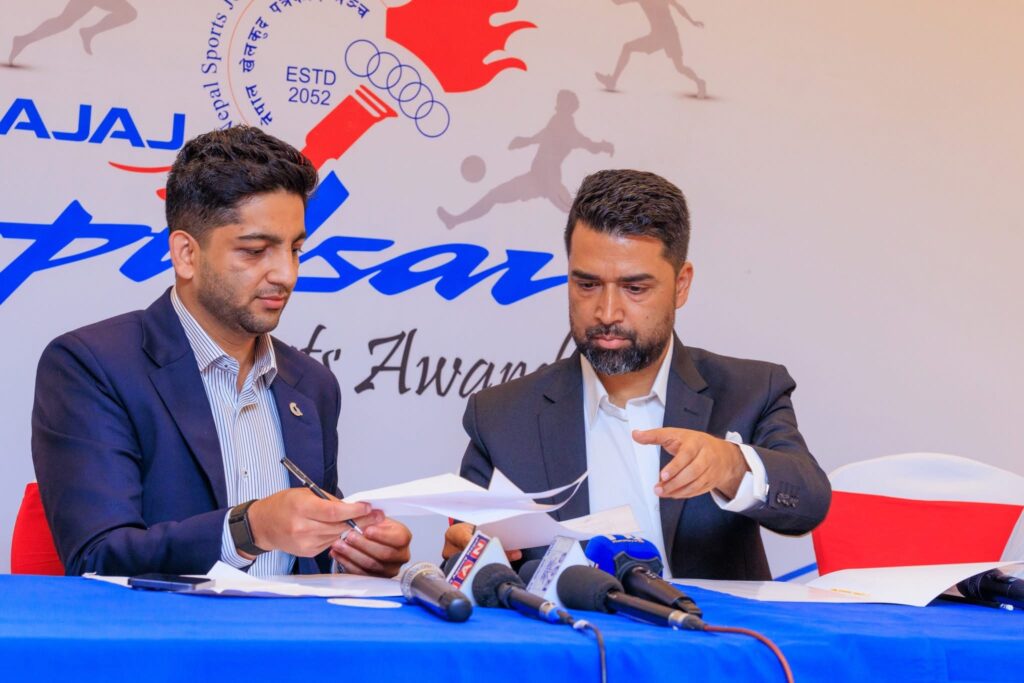
Even the country’s most prestigious annual sporting honour, the Pulsar Sports Award, has been postponed. The 22nd edition, scheduled for September 14 in Pokhara, was indefinitely delayed by organisers Nepal Sports Journalists Forum (NSJF), who announced that a new date would be set once conditions stabilise.
With sponsorship as one of the primary support of most sporting events in Nepal, many upcoming tournaments are also expected to be disrupted or cancelled in the wake of the crisis.